American Airlines Has a Main Cabin Extra Problem
American's newest aircraft have far fewer Main Cabin Extra seats than older AA jets. Here's why that matters for AAdvantage elites.
American Airlines has a Main Cabin Extra problem.
It's not obvious at first. There hasn't been a big announcement and nothing has been renamed. On paper AA's extra legroom product looks exactly the same as it always has.
You only really notice it when you open a seat map.
Pull up a 787-9P or the new A321XLR and scroll through the cabin. What used to be a noticeable section of extra legroom seats is now mostly just the exit rows, maybe a bulkhead, and not much else. Once you see it, it's hard to ignore.

Screenshot via Aerolopa of forward cabin MCE sections denoted by gold headrests.
For reference, on the older 787-9, there are 36 Main Cabin Extra seats out of 295 total seats. On the 787-9P, that drops to 18 out of 244. The same aircraft, a different interior, and about half the extra legroom seats.

The A321XLR takes it even further with only 12 Main Cabin Extra seats on a 155-seat aircraft. At that point, it's not really a section anymore - it's a handful of rows with high competition from a large pool of status holders.
It didn't used to look like this
For a long time, Main Cabin Extra was one of the more dependable parts of flying American.
Not because it was premium, but because it was available. On aircraft like the A321neo or the older 787-9, you had multiple rows spread through the cabin. If you had status, especially Platinum or higher, you could usually find something decent without setting an alarm or refreshing the seat map.

What's changed isn't just the number of seats. It's how much of the aircraft is being set aside for Main Cabin Extra in the first place.
On the 787-9, just over 12% of the aircraft is MCE. On the 787-9P, it's closer to 7%. The A321XLR lands in that same range.
That's a meaningful drop, and it shows up immediately when you look at the cabin.
A different way of building the plane
The obvious assumption is that airlines are just adding more seats and something had to give.
But that's not really what's happening here.
The 787-9P actually has fewer total seats than the older 787-9. It's not a dense aircraft—it's a more premium-heavy one. More business class, more emphasis on the front of the plane, more ways to sell a better seat instead of giving one away.

That's the broader shift across the industry. Where American stands out is what happens to the middle.
Delta and United didn't go this far
Every airline is pushing harder into premium cabins right now. Delta is doing it, United is doing it, and American is clearly doing it with the 787-9P.
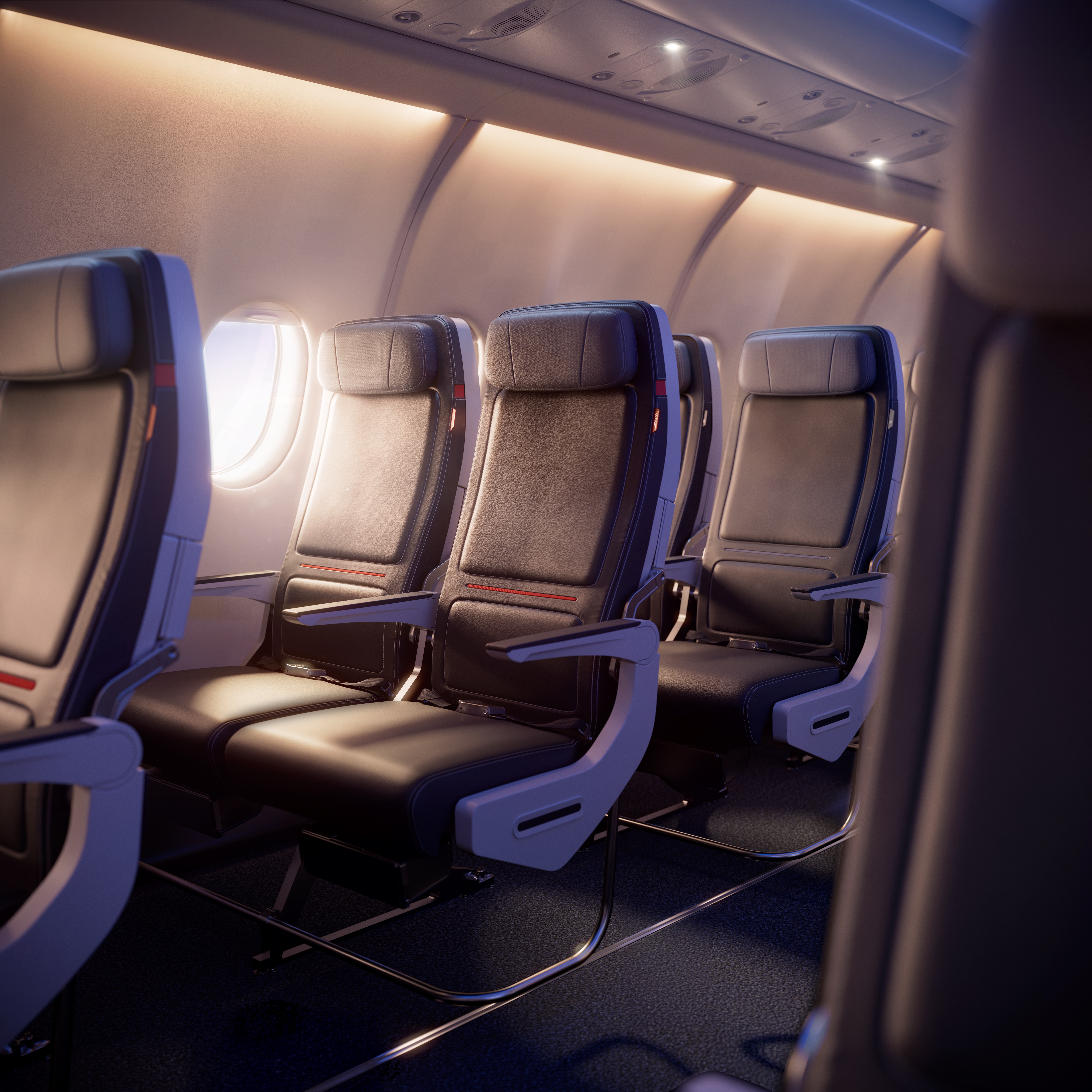
Image of Delta Comfort extra legroom seats via Delta
But if you look at how Delta and United handle extra legroom economy, they haven't pulled back the same way. United's 787-9 has 39 extra legroom seats. Delta's A350-1000 has 51. Those are still clearly defined sections of the cabin. American's 787-9P has 18.

Where this really shows up is with status
Main Cabin Extra has quietly become one of the more useful AAdvantage® benefits, mostly because everything else has gotten harder.
Upgrades don't clear the way they used to. There are more elites, more people paying for premium cabins outright, and fewer empty seats up front. On a lot of routes, especially long-haul, it's not something you can count on anymore.
So you fall back on Main Cabin Extra. Or at least you did.
What this looks like by status level
For reference, AAdvantage Gold members get access to Main Cabin Extra at check-in. Platinum, Platinum Pro, and Executive Platinum members get access to these seats at booking.
That structure hasn't changed, but your odds of snagging extra legroom has.
If you're Platinum or above, the benefit is still useful, but it feels tighter. There are fewer seats, fewer good options, and more competition for the same rows. Instead of choosing, you're securing. Of course this isn't helpful for anyone booking last minute flights on newer AA aircraft where this seating inventory will likely be gone
For Gold members, the gap is more noticeable. When Main Cabin Extra makes up less than 10% of the aircraft, a lot of those seats are already gone before the 24-hour window even opens. The benefit is still there, but it's a lot less reliable.
You won't see this change in program terms, but you'll feel it pretty quickly if you fly often.
Why this matters more now
None of this happens in isolation. Upgrades are harder to get. Elite ranks are bigger. More people are paying for premium seats instead of leaving them open.
That makes Main Cabin Extra more important than it used to be.
At the same time, on newer aircraft, there's less of it. It begs the question of the economics of the earlier, larger MCE cabins. Has AA been unable to meaningly monetize these seats? Regardless, the trend of fewer extra legroom seats will have an impact on the value of AAdvantage status for many.
Bottom line
If this showed up on one aircraft type, it wouldn't be that interesting.
But it's showing up on the planes that are going to define American's fleet going forward. The 787-9P is their new long-haul flagship, and the A321XLR is going to be a core part of the network.
Main Cabin Extra hasn't gone away. But on American's newest aircraft, it's been reduced to the point where it doesn't function the same way it used to.
If you're relying on securing these extra legroom seats—especially as an AAdvantage elite—that change is going to show up pretty quickly as more aircraft are delivered and retrofitted.